

Given the sophistication of security incidents and the complexity of technological environments, I would like to offer a critical technical observation: “Most cybersecurity failures do not occur due to a lack of technical controls, but rather during the process of transferring responsibility between different Technology teams. An organization may have High-level specialists on staff and still face severe difficulties in the event of an incident, as various departments often operate under different assumptions regarding which assets or processes should be prioritized.”
The weakest link is often that moment when no one is clear about who has the authority to carry out the next containment action; an effective security exercise —such as a Tabletop exercise (TTX) — will bring these organizational frictions to light, rather than simply validating a satisfactory outcome on paper.
To achieve true maturity, the strategy must focus on four pillars of measurement and control:
Phase 1 — Service traceability.
Track the lifecycle of an asset or service across the organization’s various operational areas, ensuring that telemetry and technical context are not lost during transitions between departments.
Phase 2 — Exception governance.
Explicitly define — using a RACI Matrix (Responsible, Accountable, Consulted, Informed) — who holds the technical and administrative authority to approve security exceptions for critical systems, thereby avoiding operational obstacles during a crisis.
Phase 3 — Measuring the scaling process.
Quantify the actual time involved in an urgent escalation by integrating metrics such as Mean Time to Respond (MTTR) and Mean Time to Detect (MTTD) directly into the Security Operations Center (SOC) dashboards.
Phase 4 — Alignment of priorities.
Addressing and resolving conflicting priorities between service availability (Operations) and data confidentiality and integrity (Information Security), especially in complex domains such as:
- Security for the Internet of Things (IoT) and operational technology (OT) environments.
- Application and cloud security.
- Governance, Risk, and Compliance (GRC).
- Vulnerability management and endpoint security.
🎯 Results and their applicability.
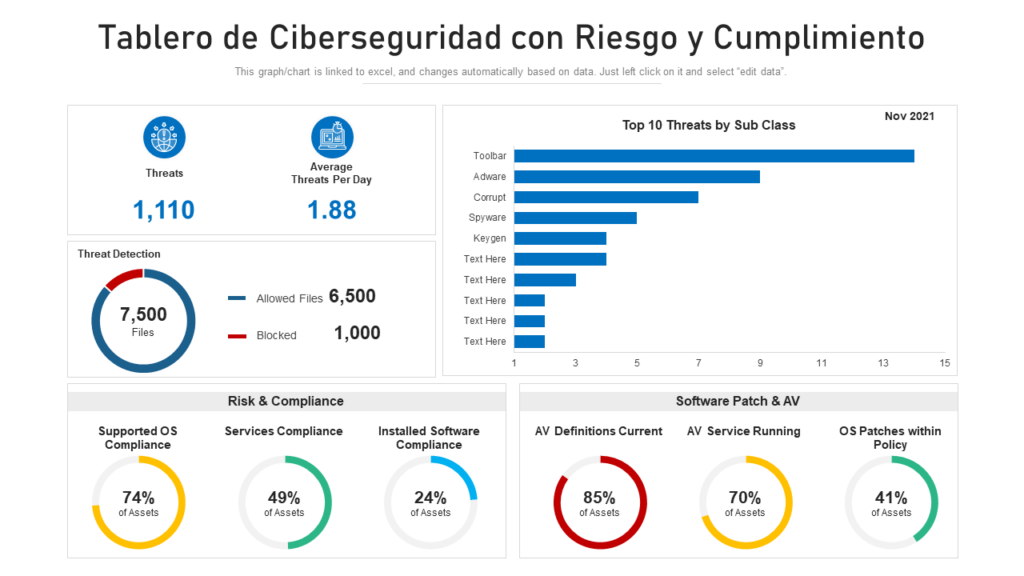
True maturity in cybersecurity is demonstrated when individuals make coordinated decisions under pressure— supported by dashboards that reflect the actual state of the security posture — rather than when policies simply appear flawless on paper. Implementing these principles enables:
- Agile and coordinated response, in the event of potential incidents, by eliminating ambiguity in the chain of command.
- Comprehensive visibility, of the interdependencies between critical equipment and systems.
- Continuous improvement, of the Incident Response Plan (IRP) processes.
¿In which areas of your organization — cloud, networks, endpoints, or IoT — are responsibility and decision-making regarding cybersecurity most ambiguous during an incident?
¿What mechanisms or metrics do you use to measure and reduce friction during the handover of responsibilities between your Technology teams — for example, between Security and Operations?
Technical references.
- National Institute of Standards and Technology. (2012). Computer Security Incident Handling Guide (NIST Special Publication 800-61 Revision 2). U.S. Department of Commerce. https://csrc.nist.gov/publications/detail/sp/800-61/rev-2/final
- National Institute of Standards and Technology. (2024). Cybersecurity Framework (CSF) 2.0. U.S. Department of Commerce. https://www.nist.gov/cyberframework
- Cybersecurity and Infrastructure Security Agency. (s.f.). Tabletop Exercise Packages. United States Department of Homeland Security. https://www.cisa.gov/resources-tools/resources/tabletop-exercise-packages
- European Union Agency for Cybersecurity. (2021). Incident Response Handbooks. ENISA. https://www.enisa.europa.eu/topics/incident-response/incident-response-handbooks
- The MITRE Corporation. (s.f.). MITRE ATT&CK Framework. https://attack.mitre.org/